
North Vancouver Renovation Contingency Budget: Planning for Older Homes | WGC
North Vancouver Renovation Contingency Budget: Planning for Older Homes
You have chosen the rooms you want to renovate, discussed the design and started reviewing contractor estimates. The budget looks manageable, and you are ready to move forward.
Then a question comes up: What happens if the contractor opens a wall and finds something nobody expected?
It is a reasonable concern, especially when renovating an older home.
A North Vancouver renovation contingency budget is money set aside to cover unforeseen construction expenses that may arise after work begins. It is separate from the agreed construction price and should not be treated as money that automatically needs to be spent.
For older homes, these unexpected expenses might involve concealed moisture damage, deteriorated framing, aging plumbing or electrical systems that need additional work.
When planning a home renovation in North Vancouver, the goal is not to predict every hidden problem. It is to understand the potential risks, set aside a realistic reserve and agree on how additional work will be assessed and approved.
A thoughtful contingency budget can make unexpected discoveries easier to manage without forcing rushed financial decisions halfway through the renovation.
Why Do Older North Vancouver Homes Need a Renovation Contingency?
Renovating an existing home is different from building a new one.
With a new house, the project begins with a planned structure and construction documents. With a renovation, the contractor must work around materials, framing and building systems that may have been installed decades earlier.
Some of those components are hidden behind drywall, flooring, cabinetry and insulation.
Even a detailed inspection cannot reveal every concealed condition without opening parts of the building.
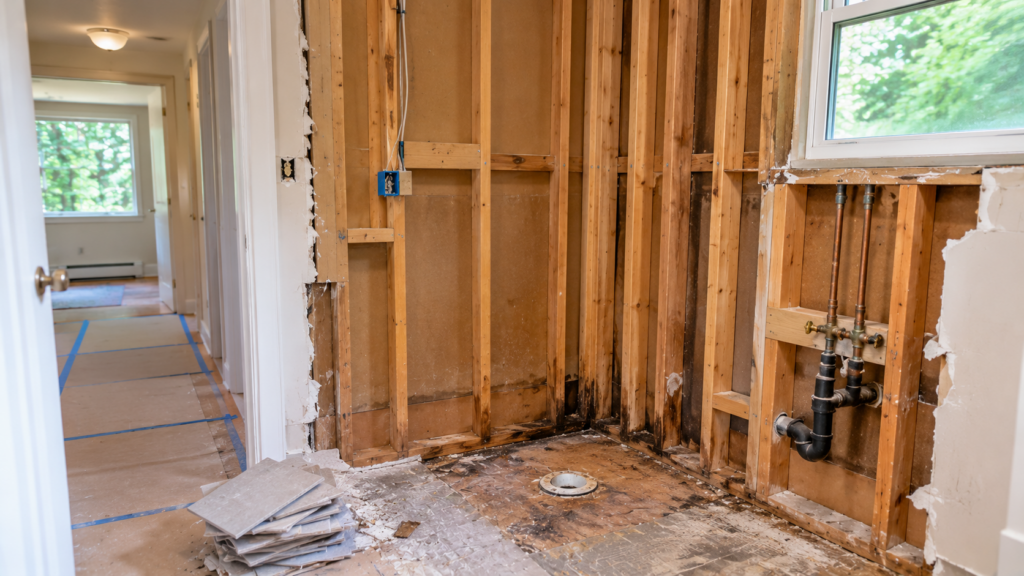
For example, a bathroom may look perfectly serviceable before renovation. Once the old shower is removed, the contractor might discover moisture-damaged subflooring that needs replacement before the new waterproofing and tile can be installed.
That repair may not have been included in the original renovation quote because the damage was not visible.
North Vancouver’s Existing Housing Conditions
North Vancouver includes established residential neighbourhoods with homes built during different periods and under different construction practices.
Properties in areas such as Lynn Valley, Edgemont, Deep Cove and Central Lonsdale can vary considerably in age, construction type and renovation history.
Some older homes have already undergone substantial improvements. Others may still contain original building systems or modifications made by previous owners.
North Shore weather also makes moisture management an important part of renovation planning, particularly where a property has aging exterior materials, drainage issues or vulnerable building-envelope details.
These are reasons to investigate the property, not reasons to assume that every older North Vancouver home has serious problems.
A useful contingency budget reflects the actual condition of the property and the work being planned.
What Unexpected Problems Can Affect an Older Home Renovation?
The most significant renovation surprises are often discovered in areas that were covered by existing finishes.
Four categories deserve particular attention during North Vancouver renovation budget planning: moisture, structural components, plumbing and electrical systems.
1. Hidden Moisture Damage
Moisture can affect different parts of a home, including basements, bathrooms, exterior walls and areas around windows.
An existing finish may hide damaged materials beneath it.
For example, removing bathroom tile might reveal softened subflooring around a shower. Opening a basement wall could expose staining or deterioration that needs further investigation.
Potential concerns include:
- Water-damaged subflooring beneath bathroom fixtures.
- Deteriorated framing around windows and exterior openings.
- Moisture intrusion through basement walls.
- Problems with exterior drainage or water management.
- Previous leaks that were repaired cosmetically without addressing the source.
- Damaged materials around roofs, balconies or other exterior connections.
The correct repair depends on what caused the moisture.
Replacing damaged drywall without resolving an active leak would not address the underlying problem.
In some cases, a qualified professional may need to assess drainage, waterproofing or building-envelope conditions before the renovation can proceed.
Budget planning tip: If there are signs of moisture before construction, investigate them early. A known problem should be included in the planned renovation scope whenever possible, rather than automatically left for the contingency.
2. Structural Framing and Previous Alterations
Structural changes are another potential source of additional expenses.
A homeowner might want to remove a wall between the kitchen and dining room to create an open-concept space.
During planning, the contractor and structural engineer assess the existing structure and determine how the loads can be supported.
However, demolition may reveal framing conditions that differ from the available plans or initial assumptions.
For example:
- Previous renovations may have altered joists or beams.
- Concealed framing could be deteriorated.
- Existing support posts may not be positioned as expected.
- The condition of a supporting structural component may require further assessment.
- A proposed opening may need additional reinforcement.
Not every discovery leads to major work.
Sometimes the condition can be addressed with a relatively focused repair. In other cases, the engineer may need to revise the structural design.
Either way, the additional work should be evaluated before construction proceeds.
For homeowners planning older home renovations in North Vancouver, structural investigation and a financial reserve are particularly useful when the renovation involves removing walls or changing the layout.
3. Aging Plumbing Systems
Plumbing problems are not always obvious during an initial walkthrough.
A bathroom sink may drain normally even though parts of the existing plumbing system are approaching the end of their useful service life.
When walls or floors are opened, the contractor may discover connections, pipes or drainage arrangements that need attention.
Potential issues include:
- Corroded or deteriorated pipes.
- Old or poorly executed plumbing repairs.
- Leaking connections hidden behind cabinets.
- Drainage conditions that complicate fixture relocation.
- Inaccessible or unsuitable existing pipe routes.
- Plumbing work that needs modification to accommodate the approved renovation.
Imagine renovating an older kitchen and moving the sink to a different wall.
The original estimate might account for the planned relocation. But if an unexpected drainage problem is discovered, additional work may be needed before the new kitchen can be completed.
A qualified plumbing contractor should assess the condition and recommend the appropriate scope.
Replacing every older pipe is not automatically necessary. The decision should be based on the actual system, its condition and the renovation requirements.
4. Older Electrical Systems
Electrical work is another area where concealed conditions can affect the budget.
An older home’s existing system may have been designed for a different level of electrical demand.
A new kitchen might include additional appliances, more outlets or updated lighting. A larger renovation could also involve heating equipment or other electrical loads.
Before construction, a qualified electrical contractor may need to assess the existing panel, wiring and available capacity.
Potential budget considerations include:
- Additional circuits for kitchen appliances.
- Changes to electrical outlet locations.
- Previous wiring alterations.
- Panel or service capacity limitations.
- Damaged or unsuitable wiring discovered during demolition.
- Additional work required for the approved renovation scope.
Some of these upgrades can be anticipated during design.
Others may depend on conditions revealed after the existing finishes are removed.
Electrical deficiencies should be reviewed by qualified professionals and addressed appropriately rather than concealed behind new finishes.
Do Older Homes Also Need Hazardous-Material Testing?
Hazardous materials are another important consideration when planning demolition in an older home.
Asbestos-containing materials were used in many British Columbia buildings, particularly before the early 1990s.
Potentially affected products can include certain flooring materials, drywall compounds, insulation and other construction components.
Before materials are disturbed, the appropriate hazardous-material assessment must be completed.
If asbestos-containing materials are identified in the work area, suitable abatement procedures and qualified professionals may be required.
WorkSafeBC provides information about asbestos risks during renovation and demolition.
Testing and any necessary remediation should be considered during preconstruction planning.
Where hazardous materials are already suspected, the assessment should not simply be postponed until the renovation contingency is needed.
How Much Contingency Should You Set Aside for a North Vancouver Renovation?
There is no single contingency percentage that works for every home.
The appropriate amount depends on the project’s scope, the age and condition of the property, how much investigation has already been completed and the level of uncertainty that remains.
A small cosmetic renovation with clearly understood conditions may need a different reserve from a substantial renovation involving structural changes, plumbing relocation and an older basement.
For planning discussions, a reserve around 15% to 20% of construction costs can be a useful starting illustration. Older properties with extensive concealed work may justify a larger amount.
These percentages are not mandatory BC requirements, verified North Vancouver market averages or guarantees that the reserve will be enough.
The amount should be discussed with the contractor and adjusted to the project’s specific risks.
What Should Influence Your Contingency Amount?
Renovation Condition | Budget Consideration |
| Cosmetic updates with limited demolition | Fewer concealed components may be disturbed |
| Kitchen or bathroom renovation involving plumbing changes | Existing service conditions may affect the final scope |
| Structural wall removal | Hidden framing and support requirements may influence costs |
| Major renovation of an older home | More building systems and concealed conditions may be involved |
| Basement renovation with signs of moisture | Investigation and water-management repairs may be necessary |
| Home with extensive previous alterations | Existing construction may differ from available documentation |
The more uncertainty that can be resolved before construction, the more informed the contingency decision becomes.
Sample North Vancouver Renovation Budget With Contingency
Consider a hypothetical homeowner planning a substantial renovation of an older detached house in North Vancouver.
The project includes a kitchen layout change, bathroom improvements, some structural modifications and associated plumbing and electrical work.
The contractor has developed a construction budget, and the homeowner also needs to account for planning expenses and separately purchased materials.
The following example uses a 20% contingency calculated on the construction budget.
All amounts are illustrative Canadian-dollar figures. They are not actual Walker General Contractors prices, verified local averages or quotations for specific work.
Part A: Planned Renovation Expenses
Budget Item | Example Amount |
| Main construction contract | $120,000 |
| Design, engineering and permit budget | $9,000 |
| Separately purchased appliances and fixtures | $6,000 |
| Planned expenditure before contingency | $135,000 |
These expenses represent the work and purchases already anticipated.
Part B: Calculate the Contingency Reserve
For the example, the homeowner sets aside 20% of the construction contract amount.
$120,000 × 20% = $24,000
The complete allocation becomes:
Budget Category | Amount |
| Planned renovation expenditure | $135,000 |
| Separate contingency reserve | $24,000 |
| Total budget allocation | $159,000 |
The $159,000 figure is before applicable taxes and assumes the listed costs are not already duplicated elsewhere.
The important distinction is that $24,000 is being held in reserve.
It is not automatically owed to the contractor.
If the renovation proceeds without unexpected expenses, some or all of that reserve may remain unspent.
Part C: What Happens if Unexpected Repairs Are Needed?
Now imagine that construction reveals three conditions requiring additional work.
Unexpected Work | Hypothetical Approved Cost |
| Repair concealed moisture-damaged subflooring | $6,500 |
| Additional electrical corrections | $4,200 |
| Structural framing repairs and related professional review | $5,800 |
| Total Additional Approved Work | $16,500 |
If these costs are not already included elsewhere in the contract, they can be tracked against the homeowner’s contingency reserve.
The calculation is:
$24,000 contingency − $16,500 approved additional work = $7,500 remaining
Revised Budget Position
Budget Component | Amount |
| Original planned expenditure | $135,000 |
| Approved unforeseen work | $16,500 |
| Updated expected expenditure | $151,500 |
| Uncommitted contingency remaining | $7,500 |
| Total original budget allocation | $159,000 |
This example shows how a contingency can absorb necessary additional work without automatically increasing the homeowner’s original funding allocation.
The remaining $7,500 is still available for future unforeseen conditions.
If additional expenses exceed the remaining reserve, the homeowner will need to review the scope, available funds and options with the contractor.
The figures exclude applicable taxes and any additional fees or markups not already included in the hypothetical approved costs.
What Is the Difference Between Contingency, Allowances and Exclusions?
These terms often appear in renovation quotes, but they do not mean the same thing.
Understanding the difference helps homeowners avoid double-counting expenses.
Contingency
A contingency is a financial reserve for unexpected work or uncertain conditions.
For example, the homeowner may set aside money in case damaged framing is discovered when an older bathroom is demolished.
Material Allowances
An allowance is an amount included in the quote for a material or selection that has not yet been finalized.
For example, a renovation contract might include a $3,000 allowance for bathroom tile.
If the final selection costs more than the allowance on the agreed pricing basis, the difference may increase the project cost.
Exclusions
An exclusion is work or a product that is not covered by the quoted price.
For example, the construction quote may exclude appliance purchases or certain professional fees.
These expenses should be identified and budgeted separately.
Budget Item | Purpose |
| Construction contract | Pays for the agreed scope of work |
| Allowance | Covers a specified amount for a selection or defined item |
| Exclusion | Identifies work or costs not included in the quote |
| Contingency | Provides a reserve for unforeseen expenses |
| Optional upgrade | Covers a homeowner-requested improvement outside the original scope |
Important: Do not automatically use the contingency fund to pay for optional design upgrades.
If you choose more expensive countertops or additional cabinetry, that is a separate budgeting decision.
Keeping essential repair money separate from discretionary upgrades helps protect the project against genuine surprises.
How Can You Reduce the Risk Before Renovation Begins?
A contingency is valuable, but it should not replace proper investigation.
Some uncertainties can be reduced through early assessments and careful planning.
Review the Existing Property
Before finalizing a substantial renovation, discuss the visible condition of the house.
Consider whether there have been known leaks, previous repairs or signs of structural movement.
Useful information may include:
- Previous renovation records.
- Available building drawings.
- Known plumbing or electrical upgrades.
- Water damage or insurance repair history.
- Inspection reports.
- Details of earlier structural modifications.
The homeowner does not need to identify every technical concern personally.
The goal is to provide the contractor and relevant professionals with useful background information.
Investigate Known Moisture Issues
If the basement has experienced water intrusion or a bathroom shows signs of ongoing leakage, investigate before covering or rebuilding the affected area.
A known moisture problem should be treated as part of the planned work once its scope can reasonably be established.
Arrange Appropriate Professional Assessments
Structural engineering, electrical inspections, plumbing assessments or hazardous-material surveys may be appropriate depending on the renovation.
These services have their own costs, but they can help establish a more accurate scope before construction starts.
Define the Renovation Clearly
A vague scope makes it difficult to distinguish between included work and additional work.
For example, “renovate the bathroom” could involve cosmetic replacements or a complete reconfiguration of plumbing, waterproofing and fixtures.
A written scope should identify what is included, excluded and still uncertain.
For a broader discussion of renovation cost factors, see WGC’s Vancouver renovation cost guide.
How Do Written Change Orders Help Control Unexpected Costs?
A contingency budget works best when it is supported by a clear process for handling changes.
Finding a problem during demolition does not automatically mean the contractor should proceed with additional work and send an invoice afterward.
The homeowner should understand the condition, the proposed solution and the financial implications before authorizing the change, subject to any immediate safety or emergency obligations.
The Canadian Home Builders’ Association recommends documenting changes to renovation work through written change orders.
Step 1: Identify the Unexpected Condition
Suppose a contractor removes the old bathroom flooring and discovers damaged subflooring around the shower.
The issue should be documented, with photographs where practical and a description of the affected area.
Step 2: Assess the Cause and Required Repair
The relevant professional or trade evaluates the problem.
The objective is to determine what must be repaired and whether the underlying cause also needs attention.
For moisture damage, this may mean identifying and addressing the water source before replacing the affected materials.
Step 3: Prepare a Proposed Change
The contractor describes the additional work.
A useful written change proposal should identify:
- The unexpected condition.
- The recommended repair.
- Work and materials required.
- Any relevant professional assessments.
- The additional cost or agreed pricing method.
- Applicable taxes and fees.
- The expected effect on the renovation schedule.
If the condition requires engineering or revised permit documentation, that should also be addressed.
Step 4: Obtain Written Approval
The homeowner reviews the proposal and asks questions where needed.
Once the change is approved in accordance with the contract, the additional work can proceed.
For an urgent safety concern, work may need to stop and the site may need to be secured immediately while the appropriate response is determined.
The regular change approval process should not be used as a reason to continue unsafe work.
Step 5: Update the Budget
After the change is approved, the homeowner’s budget worksheet should be updated.
For example:
Change Order | Approved Cost | Contingency Remaining |
| Starting reserve | — | $24,000 |
| CO-001: Subfloor repairs | $6,500 | $17,500 |
| CO-002: Electrical corrections | $4,200 | $13,300 |
| CO-003: Structural repairs | $5,800 | $7,500 |
This gives the homeowner a clear record of how much has been committed and what remains available.
Written approvals also help reduce misunderstandings about scope, pricing and scheduling.
What Should a North Vancouver Renovation Change Order Include?
Before approving additional work, homeowners should review the following information.
- Project identification: The property and relevant contract.
- Change description: What was discovered or requested.
- Reason for the change: Why the work is necessary.
- Scope of work: What will be repaired, replaced or modified.
- Additional price: The cost or agreed pricing method, including applicable fees and taxes.
- Schedule impact: Whether the work changes important milestones.
- Professional requirements: Any engineering, permit revision or inspection requirements.
- Approval: Written authorization from the appropriate parties.
- Budget update: The revised contract value and contingency position.
A change order does not need to be unnecessarily complicated, but it should provide enough information for both parties to understand the decision.
For larger projects, a contractor may maintain a change order log alongside progress reports and budget updates.
Why City vs District Permit Requirements Matter
North Vancouver homeowners should also know that the City of North Vancouver and District of North Vancouver are separate municipalities.
Each has its own permit application process, documentation requirements and inspection procedures.
This matters when unforeseen work changes the original renovation scope.
For example, additional structural repairs may require engineering review or changes to approved construction drawings.
The City of North Vancouver provides permit information for residential renovations and alterations.
The District of North Vancouver also provides residential building permit resources and project-specific requirements.
The applicable municipality should be confirmed using the property’s civic address.
Unexpected construction work should not be concealed or completed contrary to permit requirements simply because it was not anticipated in the original budget.
What If the Renovation Contingency Runs Out?
A contingency is a reserve, not an unlimited source of funds.
If unexpected work uses most of the available reserve, the homeowner and contractor should review the remaining scope and financial position before proceeding with discretionary changes.
The first step is determining which work is necessary for safety, structural performance, building compliance or proper completion.
Next, separate optional improvements from essential work.
For example, changing decorative lighting may be deferrable. Repairing a structural deficiency or active water leak may need to be addressed before the renovation can continue safely.
Possible responses include:
- Reviewing the remaining construction scope.
- Deferring optional features where practical.
- Selecting more economical finishes that still meet project requirements.
- Revisiting material allowances and owner purchases.
- Adjusting the project in clearly documented stages where feasible.
- Reviewing additional funding before authorizing further costs.
Reducing the cost of decorative finishes can be sensible.
Skipping necessary waterproofing, structural work or electrical corrections is not an appropriate way to protect the budget.
If unexpected conditions make the original plan financially impractical, the homeowner may need to reassess the scope with the contractor and relevant professionals.
North Vancouver Renovation Budget Checklist
Before signing a renovation agreement, use this checklist to review your financial plan.
- Define the renovation scope: Identify which rooms, structures and building systems will be affected.
- Review existing conditions: Discuss moisture, framing, plumbing, electrical and previous alterations.
- Arrange necessary assessments: Confirm whether engineering, hazardous-material testing or other professional reviews are required.
- Separate budget categories: Distinguish construction costs, soft costs, owner purchases and contingency.
- Choose a realistic reserve: Base the contingency on project complexity and remaining uncertainty.
- Review allowances and exclusions: Understand which expenses are already included and which are separate.
- Confirm permit responsibilities: Identify the correct municipality and who manages required approvals.
- Agree on change orders: Confirm how unexpected work will be evaluated, priced and approved.
- Track the remaining reserve: Keep a record of approved additional spending.
- Protect essential repairs: Avoid using the full contingency for optional upgrades.
- Review schedule effects: Understand how additional work may affect trades, inspections and completion.
- Confirm available funding: Make sure the overall budget is manageable before construction begins.
A practical budget does not eliminate uncertainty.
It creates a way to respond when the existing home requires more work than originally expected.
Frequently Asked Questions About North Vancouver Renovation Contingency Budgets
How much contingency should I budget for an older home renovation in North Vancouver?
The amount depends on the renovation scope, property condition and remaining unknowns.
A planning example might use a reserve around 15% to 20% of construction costs, with a larger amount considered for projects involving significant concealed structural or building-system risks.
The appropriate figure should be determined through a project-specific assessment, not treated as a guaranteed standard.
Is contingency included in a renovation contractor’s quote?
It depends on the proposal.
Some contracts identify a specific contingency allowance or provisional amount. Other homeowners keep their contingency as a separate reserve outside the contract price.
Ask whether the quoted total already includes any contingency-related amounts to avoid counting them twice.
What happens if the contingency is not used?
If the homeowner maintains the money as a separate reserve and no unexpected expenses arise, the unused funds remain available to the homeowner.
If the contingency is incorporated into a contract, its treatment depends on the written agreement.
Review those terms before signing.
Should I use contingency money for upgraded cabinets or countertops?
Ideally, optional upgrades should have a separate budget.
Using most of the contingency for decorative selections can leave insufficient funds if necessary repairs are discovered later.
Material allowance adjustments should also be tracked separately where possible.
Can hidden moisture damage increase renovation costs?
Yes.
If demolition reveals deteriorated flooring, framing or other materials affected by moisture, additional repairs may be necessary.
The extent of the cost depends on the cause, affected area and required repair.
Do older North Vancouver homes always need plumbing and electrical upgrades?
No.
Some older homes have been substantially updated and may have suitable existing systems.
Others may require changes to accommodate the proposed renovation.
Qualified professionals should assess the actual condition and requirements rather than assuming that every system needs replacement.
Can a fixed-price contract still have unforeseen renovation costs?
Yes, depending on the contract.
A fixed-price agreement establishes a price for defined work, subject to its terms.
Concealed conditions, owner-requested changes or other specified circumstances may lead to additional work and approved price adjustments.
Should I investigate an older home before asking for a renovation quote?
It is useful to investigate known concerns before requesting detailed pricing.
Contractors can often provide a preliminary estimate from the available information, but additional assessments may improve the accuracy of the final scope and budget.
Planning an Older Home Renovation in North Vancouver?
An older home can offer character, an established location and opportunities to create a space that better suits the way you live.
Renovating that home also means working with its existing construction.
Some conditions will be visible during planning. Others may only become clear when demolition begins.
A well-considered North Vancouver renovation contingency budget provides room to deal with unexpected moisture damage, structural repairs or building-system issues without automatically treating every discovery as a financial crisis.
The most useful approach is to investigate known problems early, define the renovation scope clearly, protect a reasonable reserve and document additional work before it proceeds.
Walker General Contractors helps homeowners plan and coordinate home renovations in North Vancouver, including kitchens, bathrooms, basement renovations and larger residential projects.
Whether you are updating a family home, changing the layout or planning a substantial renovation, understanding the existing property is an important part of building a realistic budget.
Considering renovating an older North Vancouver home?
Contact Walker General Contractors to discuss your renovation goals, existing-property considerations and the next steps toward a clearly defined construction plan.
About the Author: walkergc

Related Posts